DoorDash Takes 30% of Every Order - Here's How Restaurants Keep More Profit

DoorDash Takes 30% of Every Order - Here's How Restaurants Keep More Profit
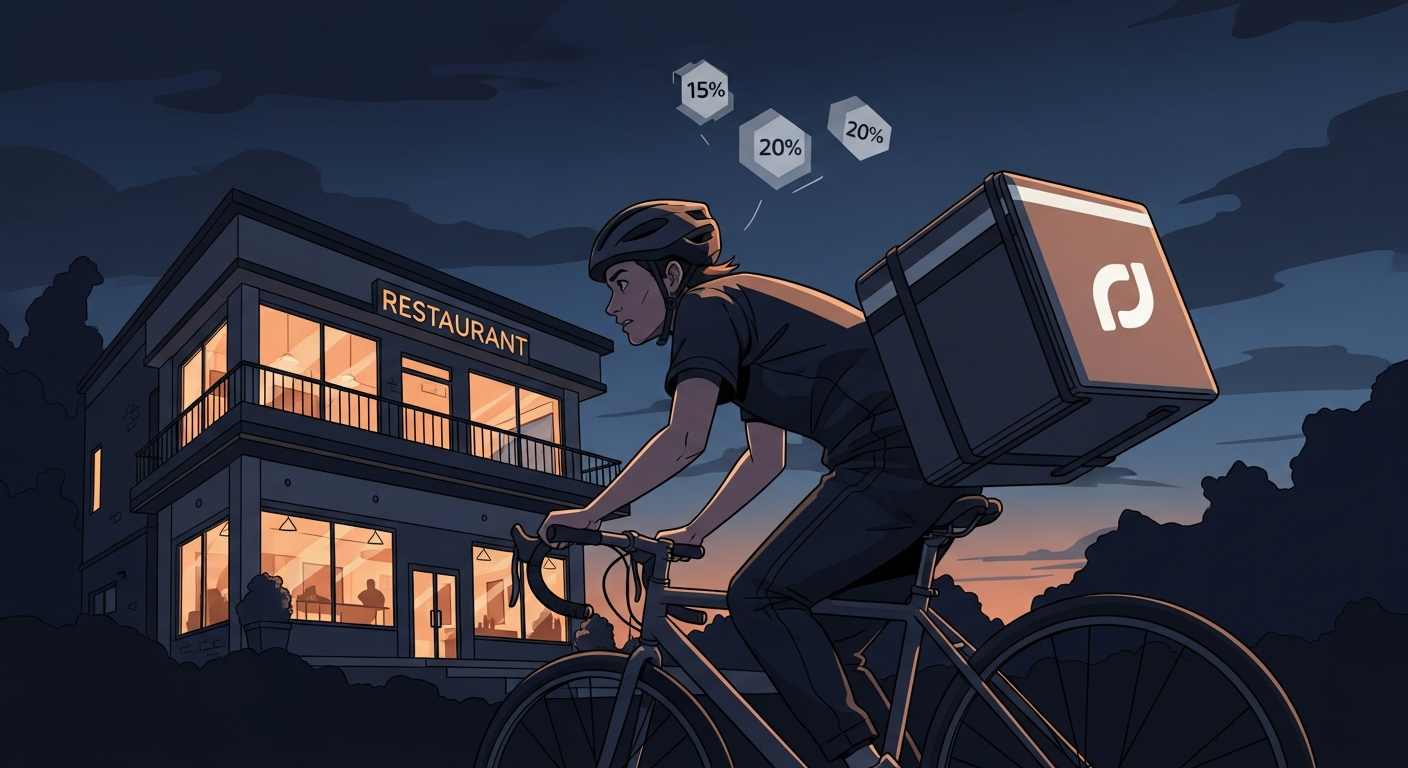
If you're a restaurant owner reading this, you probably already know the pain: DoorDash, Uber Eats, and Grubhub are eating your margins alive.
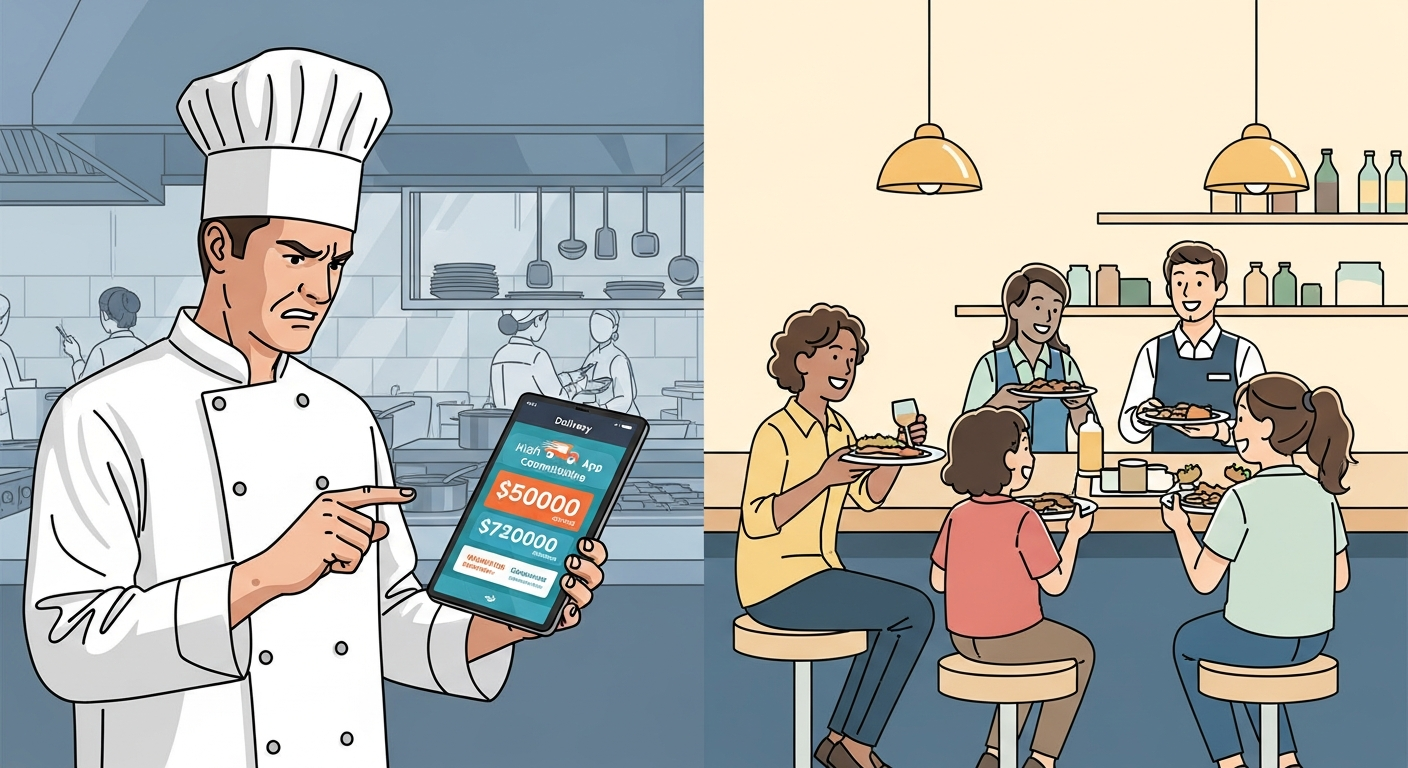
A customer orders $50 worth of food through DoorDash. You make the food, package it perfectly, hand it to a driver, and DoorDash keeps $15-16 of that order.
That's not a typo. Delivery apps charge restaurants 15-30% commission on every single order.
For many small restaurants operating on 5-10% profit margins, this means losing money on every delivery order unless prices are jacked up significantly.
Let's break down exactly how these fees work, when delivery apps actually make sense, and what you can do to keep more of your revenue.
Related: Already losing money on credit card processing too? Learn how cash discount programs can eliminate your processing fees entirely.
What Do Delivery Apps Actually Charge?
Here's the brutal truth about delivery app fees for restaurants:
| Platform | Commission Range | What You Get |
|---|---|---|
| DoorDash | 15-30% | Basic listing at 15%, "DashPass" visibility at 25-30% |
| Uber Eats | 15-30% | Self-delivery at 15%, full delivery at 30% |
| Grubhub | 15-30% | Similar tiered structure |
| Postmates | 15-30% | (Now owned by Uber Eats) |
The "15%" tier usually means YOU handle delivery - the app just takes orders. The 25-30% tier includes their drivers.
The Hidden Math Most Restaurant Owners Miss
Let's say you run a burger joint with 30% food costs and 25% labor costs. On a $100 dine-in order:
- Revenue: $100
- Food cost: $30
- Labor: $25
- Overhead: $15
- Profit: $30 (30% margin)
Now that same $100 order through DoorDash at 30% commission:
- Revenue: $100
- DoorDash fee: $30
- Food cost: $30
- Labor: $25
- Overhead: $15
- Profit: $0 (or negative)
You literally make nothing. And that's before packaging costs, tablet fees, or any order errors.
When Do Delivery Apps Actually Make Sense?
Despite the fees, delivery apps aren't always a bad deal. They make sense when:
1. You're Using Them for Customer Acquisition Only
Think of DoorDash as advertising. If a customer discovers you on DoorDash, orders once, and then you convert them to direct ordering - that $15 fee was a customer acquisition cost.
2. You Have Extremely High Margins
If you're running 50%+ margins (rare in restaurants), you can absorb the hit.
3. You're Filling Dead Time
If your kitchen is sitting idle from 2-5pm, incremental delivery orders at thin margins might beat zero revenue.
4. You Raise Prices for Delivery Only
Many restaurants charge 15-30% more on delivery apps to offset fees. Customers expect this.
How to Actually Keep More Profit
1. Build Your Own Direct Ordering System
The real solution is getting customers to order directly from you. Options include:
- Your own website with online ordering (Square Online, Toast, ChowNow)
- QR codes on packaging that link to direct ordering
- Loyalty programs that reward direct orders
A direct order through your website with a 2.9% payment processing fee beats a 30% DoorDash fee every single time.
2. Use Delivery Apps at Lower Tiers
If you have capacity for your own delivery (or pickup), use the 15% self-delivery tier and keep more margin.
3. Negotiate Your Rates
Yes, you can negotiate with DoorDash and Uber Eats - especially if you have significant volume or are in a competitive market. Threaten to leave for a competitor and see what they offer.
4. Optimize Your Payment Processing Separately
Here's what most restaurant owners miss: your credit card processing fees are separate from delivery app fees, and often way too high.
If you're paying 3-4% on credit card transactions, that's eating into your already-thin delivery margins. Check out our guide on why Florida restaurants are switching to local processors. Sleft helps restaurants:
- Get processing rates as low as 0% with cash discount programs
- Eliminate hidden fees from Toast, Square, and Clover
- Keep next-day funding instead of waiting 2-3 days
The Real Numbers: A Case Study
One of our restaurant clients was processing $80,000/month through DoorDash and paying:
- DoorDash fees: $20,000/month (25% average)
- Credit card processing: $2,800/month (3.5% through their POS)
After working with Sleft:
- DoorDash fees: Still $20,000 (we can't change that)
- Credit card processing: $0/month (cash discount program)
- Monthly savings: $2,800
That's $33,600/year back in their pocket - just from fixing their payment processing.
What You Should Do Next
1. Audit your DoorDash/Uber Eats commission tier. Are you on the right plan for your business model?
2. Calculate your true profit per delivery order. If it's negative, you need to raise prices or reconsider the platform.
3. Build a direct ordering channel. Every customer you convert to direct ordering is 15-30% more profit.
4. Fix your payment processing. If you're paying more than 2.5% on credit cards, you're leaving money on the table. Have a POS that won't split checks? We can help with that too.
💰 Want to see how much you're overpaying? Use our free savings calculator to find out in 30 seconds. Or get a free statement analysis from our team.
Free Restaurant Profit Audit
Want us to look at your delivery app fees AND payment processing to find where you're losing money?
Text "DELIVERY" to (813) 534-0522 for a free profit audit.
We'll break down:
- Your true cost per delivery order
- What you're overpaying in processing fees
- Specific ways to keep more revenue
No pitch, just numbers. If we can help, we'll tell you. If we can't, we'll tell you that too.
How to Negotiate Better Delivery App Rates
Most restaurant owners don't realize delivery app rates are sometimes negotiable. Here's how to approach it:
DoorDash
DoorDash offers tiered commission plans (15%, 25%, 30%) with different levels of visibility and marketing. The basic plan at 15% means less promotion but more profit per order. For restaurants in high-demand areas, DoorDash may negotiate custom rates to keep you on the platform.
Uber Eats
Uber Eats also offers tiered pricing. Their "Lite" plan charges lower commissions but limits delivery radius. If you're a high-volume restaurant, contact your account manager directly - they have flexibility.
Grubhub
Grubhub's rates vary by market and can sometimes be negotiated during contract renewal. Ask about their "basic" plan with reduced fees.
The leverage you have: If you're a popular restaurant with consistent order volume, delivery apps want to keep you. Threatening to leave (or actually leaving for a period) can trigger better offers.
The Math: When Delivery Apps Make Sense vs. When They Don't
Here's a simple framework:
Delivery apps make sense when:
- The order is incremental (a customer who wouldn't have found you otherwise)
- Your food cost is under 25% for the delivery menu
- You've raised delivery prices to account for commission
- You use it as a marketing channel to acquire customers you convert to direct ordering
Delivery apps DON'T make sense when:
- They're cannibalizing your dine-in or direct orders
- Your food cost is above 30%
- You're NOT raising prices on the app
- You have no strategy to convert app customers to direct ordering
A restaurant doing $10,000/month through DoorDash at 30% commission is paying $3,000. If even half those customers could be converted to direct ordering, that's $1,500/month back in your pocket - $18,000/year.
💰 Want to see how much you're overpaying? Use our free savings calculator to find out in 30 seconds. Or get a free statement analysis from our team.
Ready to stop overpaying? Sleft Payments offers transparent pricing with no contracts and no hidden fees. Get a free quote or call us at (813) 534-0522.
Frequently Asked Questions
Can I refuse to use DoorDash and Uber Eats?
Absolutely. Many successful restaurants operate without delivery apps entirely. The key is having strong local marketing, a website with online ordering, and a Google Business profile that drives direct traffic. Restaurants that build a loyal local following often don't need apps at all.
Why don't restaurants just raise prices on delivery apps?
Many do - and you should too. It's increasingly common to see menu prices 15-30% higher on DoorDash than in-store. Most delivery customers accept this because they're paying for convenience. If you're not marking up delivery menus, you're subsidizing the app's commission from your margin.
What's the alternative to delivery apps for delivery orders?
Options include hiring your own delivery drivers (feasible for high-volume restaurants), using lower-cost platforms like ChowNow or BentoBox that charge flat monthly fees instead of percentages, partnering with local delivery services, or using your POS system's built-in online ordering. A cash discount program on in-store orders can also free up margin to fund your own delivery operation.
How do I convert DoorDash customers to direct ordering?
Include a flyer or coupon in every delivery bag: "Order direct at [yourwebsite.com] and save 10%." Offer loyalty programs for direct orders. Make sure your website ordering is as easy as the apps. Over time, you'll build a direct customer base that doesn't cost you 30% per order.
Should I list on multiple delivery apps or just one?
If you're going to use delivery apps, being on multiple platforms increases reach. But each one adds complexity. Start with the most popular app in your area, optimize your menu and pricing, then expand if the numbers work. Track profitability per platform - if one consistently loses money, drop it.
Related reading:
- Why Restaurants Are Leaving Toast POS in 2026
- Best Credit Card Processor in Florida 2026
- How to Switch Payment Processors Without Downtime
About the Author
Grant Denmark
CEO & Founder of Sleft LLC
Grant works with restaurant owners across Florida and the East Coast to eliminate hidden payment processing fees. After watching countless restaurants struggle with delivery app margins, he's passionate about helping owners keep more of their hard-earned revenue.
Don't get Sleft Behind
We help restaurants keep more of every dollar.
Related Articles
- Payment Processing For Restaurants
- Why Restaurants Leaving Toast Pos
- Pos Cant Split Checks Restaurant Guide
Want to know exactly how much you could save? Try the Sleft Payments Savings Calculator for a personalized estimate.