Payment Processing for Contractors in Florida: The Complete 2026 Guide

Payment Processing for Contractors in Florida: The Complete 2026 Guide
You are a contractor in Florida. You spend your day on job sites, not behind a desk. When a $3,500 HVAC install is done and the homeowner asks "can I pay with a card?" — the answer needs to be yes.
But here is the problem most Florida contractors face: the way you accept payments is costing you hundreds or thousands of dollars per year in unnecessary fees. And the tools you are using were not built for how you work.
This guide is specifically for Florida contractors — plumbers, electricians, roofers, HVAC technicians, general contractors, painters, landscapers, pool companies, and anyone else who works on-site. We will cover the payment tools that actually fit your business, how to stop overpaying on processing fees, and why the "easy" solution (Square) is probably your most expensive one.
Why Contractors Get Hit Hardest on Processing Fees
Contractors have a unique combination of factors that make processing fees especially painful:
High Average Tickets
Your average transaction is not $12 at a coffee shop. It is $500, $2,000, $8,000, or more. Processing fees are percentage-based. The higher the ticket, the more you pay.
Example: A roofing contractor in Fort Lauderdale processes $60,000/month in card payments.
| Pricing Model | Monthly Fee | Annual Fee |
|---|---|---|
| Square (2.6% + $0.10) | $1,566 | $18,792 |
| Interchange-plus (IC + 0.20% + $0.08) | $1,038 | $12,456 |
| Dual pricing | ~$0 | ~$0 |
The difference between Square and interchange-plus is $6,336 per year. That is a new set of tools. That is a week of vacation. That is real money.
Keyed-In Transactions
When you take a payment on the job site and type the card number into your phone (instead of swiping or tapping), the interchange rate jumps. Card-not-present (CNP) transactions cost 0.5–1.0% more than card-present transactions.
Many contractors key in every transaction because they do not carry a card reader. That is a fixable problem.
Irregular Volume
Contractors do not process the same amount every month. You might do $20,000 in January and $80,000 in April. Flat-rate processors do not care — they charge the same percentage regardless.
But interchange-plus processors can optimize for your volume patterns. And some processors (the bad ones) will hit you with "monthly minimum" fees during slow months, charging you $25–$50 for the privilege of not processing enough.
The 4 Ways Florida Contractors Accept Payments
1. Mobile Card Reader (Tap/Chip on Your Phone)
What it is: A small Bluetooth card reader that connects to your phone. The customer taps or inserts their card on the job site.
Why it matters for contractors: You get the card-present interchange rate (lower than keyed-in), and the customer experience is professional. No more "can you write me a check?"
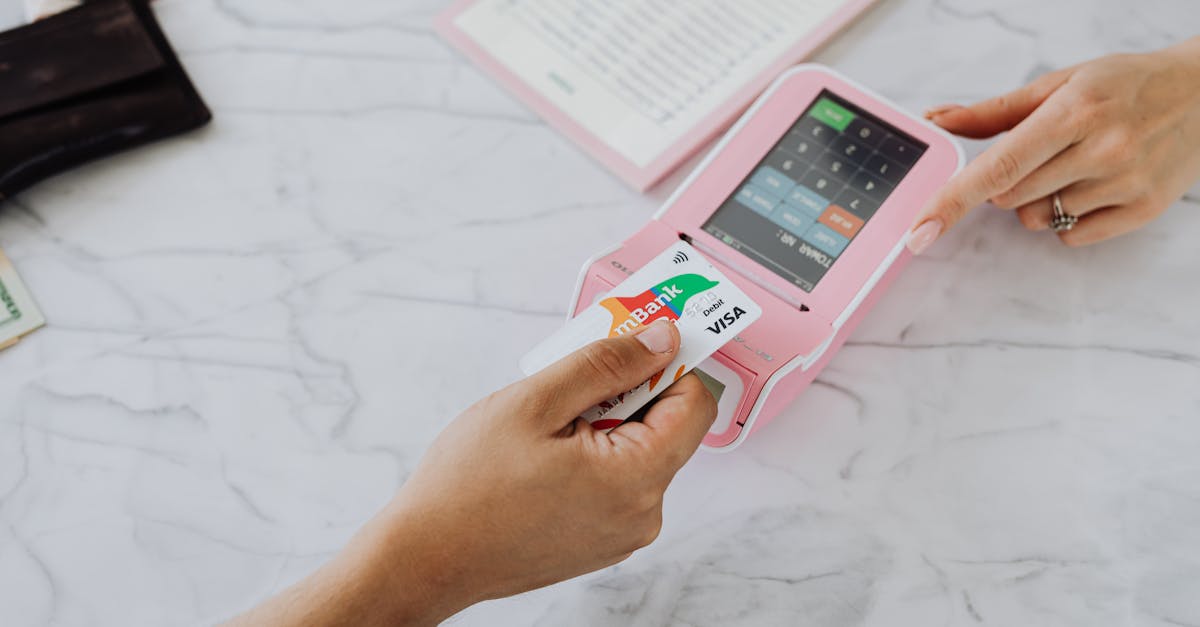
Our recommendation: We provide a free mobile reader to every contractor account. It connects via Bluetooth, works with iPhone and Android, and processes tap, chip, and swipe transactions.
Cost comparison:
- Square Reader: free hardware, 2.6% + $0.10 per transaction
- Our mobile reader: free hardware, interchange + 0.20% + $0.08 per transaction
On a $2,500 job, Square charges $65.10. We charge approximately $43.58. You save $21.52 per job.
2. Invoice Payments (Send a Link, Get Paid)
What it is: You send the customer a digital invoice via text or email. They click a link, enter their card info, and pay. You get funded next business day.
Why it matters for contractors: Many customers want to pay after the work is inspected, not on-site. Invoicing lets you send the bill digitally and get paid without chasing checks.
How it works with us:
1. You create an invoice from your phone (takes 60 seconds)
2. Customer receives a text or email with a payment link
3. Customer pays with credit card, debit card, or ACH
4. Funds hit your bank account next business day
Pro tip: Offer a small discount (1–2%) for ACH payments. ACH processing fees are typically $0.25–$1.00 flat per transaction, regardless of amount. On a $5,000 invoice, a credit card fee might be $100+. ACH costs you $0.50. Even after giving the customer a 1% discount ($50), you save $49.50.
3. Recurring Billing (Maintenance Contracts)
What it is: Automatic monthly or quarterly charges for ongoing service agreements.
Why it matters for contractors: Pool maintenance, lawn care, HVAC maintenance contracts, pest control — any recurring service should be on autopay. You stop chasing invoices and you get predictable cash flow.
What to look for:
- Card-on-file storage (PCI-compliant vault, not a sticky note)
- Automatic retry on declined cards
- Customer notification before each charge
- Easy cancellation (for the customer and for you)
4. Dual Pricing (Eliminate Fees Entirely)
What it is: You show two prices — a cash price and a card price. Cash customers save the processing cost. Card customers pay the standard price.
Why it matters for contractors: On a $5,000 job, processing fees at 2.6% are $130. With dual pricing, the customer who pays by card pays $5,200 (card price), and the customer who pays cash pays $5,000. Your processing cost: zero.
Is this legal in Florida? Yes. Dual pricing is legal in all 50 states. It is protected by the Durbin Amendment. It is different from surcharging (which has more restrictions). Read our full breakdown: Dual Pricing vs. Surcharging in Florida.
How contractors present it: Most contractors we work with put it right on the estimate:
Materials + Labor: $4,800 (cash/check)
Materials + Labor: $4,992 (card)
Customers see both prices upfront. No surprises. Most are fine with it — they understand that card processing has a cost.
Florida-Specific Considerations for Contractors
The Florida Prompt Payment Act
Florida Statute §715.12 requires that contractors on construction projects be paid within specific timeframes. If you are a subcontractor, your general contractor must pay you within a set number of days after you submit an invoice.
How this affects payment processing: If you accept card payments from general contractors, the processing fee comes out of your margin. Make sure your bid accounts for 2.5–3% in processing costs, or negotiate ACH payment terms with the GC.
Licensing and Insurance Verification
Some payment processors flag contractor accounts for "high risk" because of chargeback potential on large jobs. This can lead to fund holds — where the processor freezes your money for 30–90 days.
How to avoid fund holds:
1. Use a processor that issues you your own merchant ID (not a sub-account under a payment aggregator like Square or Stripe)
2. Provide your contractor license and insurance documentation upfront
3. Process consistently — sudden spikes in volume trigger fraud alerts
4. Get signed contracts before processing large payments
At Sleft Payments, every contractor gets their own dedicated merchant account. No shared risk pools. No surprise fund holds. If you have ever had Square or Stripe freeze your money after a large job, you know why this matters.
Sales Tax on Services
Florida does not charge sales tax on most contractor labor services (construction, repair, maintenance). However, materials and tangible goods sold as part of the job are taxable.
Your POS or invoicing system should be able to split taxable and non-taxable line items. This keeps your books clean and prevents you from over-collecting (or under-collecting) sales tax.
What to Look for in a Payment Processor (Contractor Checklist)
| Feature | Why It Matters |
|---|---|
| Mobile card reader (free) | Take card-present payments on every job site |
| Digital invoicing | Send bills via text/email, get paid without chasing |
| ACH payment option | Save 2%+ on large invoices |
| Interchange-plus pricing | See exactly what you pay, save vs. flat-rate |
| Dual pricing support | Eliminate processing fees entirely |
| Own merchant ID | No fund holds from shared risk pools |
| Next-day funding | Cash flow matters — get your money fast |
| No contract | If they trap you with a contract, they are not confident in their service |
| Recurring billing | For maintenance contracts and subscriptions |
| Job costing integration | Link payments to specific jobs for accounting |
How Much Can a Florida Contractor Save?
Here are real examples from contractors we have worked with in South Florida:
HVAC Company — West Palm Beach
- Monthly volume: $45,000
- Previous processor: Square (2.6% + $0.10)
- Previous monthly fees: $1,175
- Current monthly fees (interchange-plus): $765
- Annual savings: $4,920
Plumbing Company — Boca Raton
- Monthly volume: $28,000
- Previous processor: Stripe (2.9% + $0.30)
- Previous monthly fees: $845
- Current monthly fees (dual pricing): $0
- Annual savings: $10,140
General Contractor — Jupiter
- Monthly volume: $110,000
- Previous processor: Clover (tiered pricing, 2.3–3.5%)
- Previous monthly fees: $3,080
- Current monthly fees (interchange-plus): $1,870
- Annual savings: $14,520
Get Started
If you are a Florida contractor processing $10,000+/month in card payments, you are almost certainly paying too much.
Send us your most recent processing statement. We will analyze it line by line and show you exactly how much you can save — whether that is interchange-plus pricing, dual pricing, or a combination.
The analysis is free. The switch takes 24 hours. And you get a real person who picks up the phone when you call.
Get Your Free Statement Analysis →
Related Reading: