What Is a Merchant Account and Do You Need One in 2026?

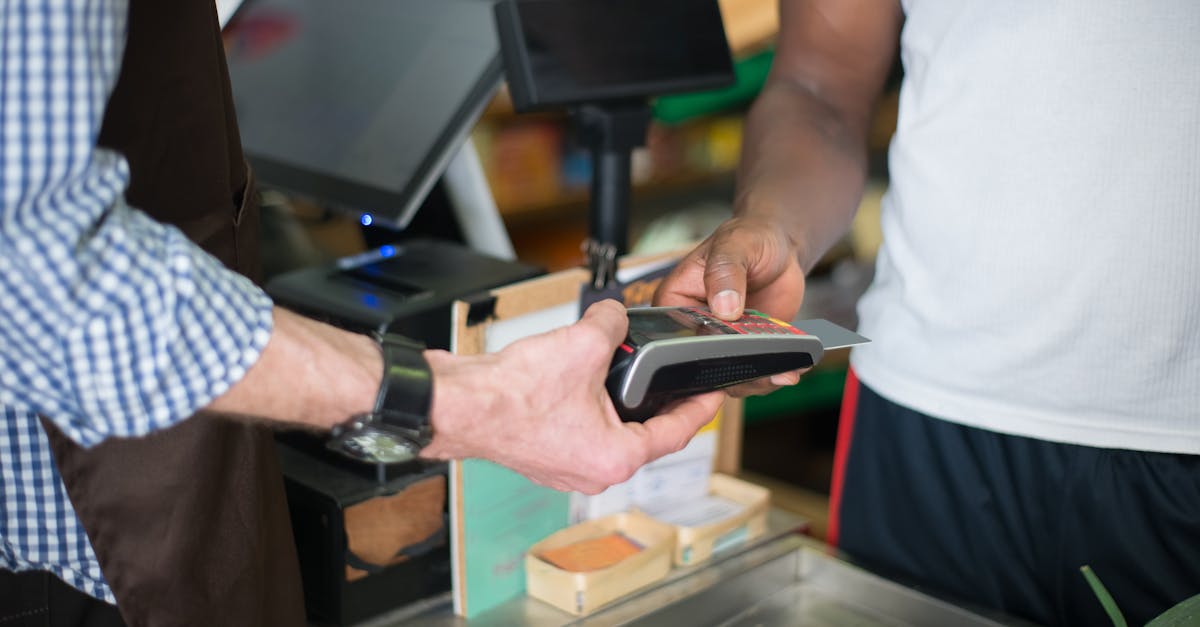
What Is a Merchant Account and Do You Need One in 2026?
If you accept credit cards at your business, you already have some form of merchant account, whether you realize it or not. But the type of account you have makes a massive difference in what you pay, how secure your funds are, and how much control you have over your money.
This guide breaks down what merchant accounts actually are, how they differ from payment service providers like Square and Stripe, and how to decide which setup is right for your business.
What Is a Merchant Account, Exactly?
A merchant account is a specialized bank account that allows your business to accept credit and debit card payments. When a customer swipes, taps, or enters their card number, the money does not go directly into your checking account. It first passes through your merchant account, where it is held briefly before being deposited into your business bank account.
Think of it as the middleman between the card networks (Visa, Mastercard, Amex, Discover) and your bank.
Every business that accepts card payments has a merchant account in some form. The question is whether you have your own dedicated merchant account or whether you are sharing one through a payment service provider.
Dedicated Merchant Account vs. Payment Service Provider
This is where things get interesting, and where most business owners get confused.
Payment Service Providers (PSPs)
Companies like Square, Stripe, PayPal, and Shopify Payments are payment service providers. They aggregate thousands of businesses under a single master merchant account. You do not get your own merchant ID (MID). Instead, you are a sub-merchant under their umbrella.
Pros of PSPs:
- Quick signup, sometimes minutes
- No credit check or underwriting
- Simple flat-rate pricing (usually 2.6% + $0.10 per transaction)
- Good for very small or brand-new businesses
Cons of PSPs:
- Higher effective rates for most businesses
- Account freezes and fund holds with little warning
- Limited customer support
- No dedicated relationship manager
- One-size-fits-all pricing that does not scale
Dedicated Merchant Accounts
A dedicated merchant account gives your business its own MID. You go through an underwriting process, and your rates are set based on your specific business type, volume, and risk profile.
Pros of dedicated accounts:
- Lower rates, especially with interchange-plus pricing
- Your own merchant ID means more stability
- Dedicated support and relationship management
- Custom rate structures that fit your business
- Far fewer account freezes
Cons of dedicated accounts:
- Application and underwriting process (usually 1-3 business days)
- May have monthly minimums or statement fees
- Not ideal for businesses processing under $3,000/month
Real-World Cost Comparison
Here is where the rubber meets the road. Let us compare what a restaurant processing $30,000/month would pay under each model.
Square (PSP): 2.6% + $0.10 per transaction
- Average ticket: $45
- Monthly transactions: ~667
- Processing cost: $780 + $66.70 = $846.70/month
Dedicated Merchant Account with Interchange-Plus:
- Interchange average: ~1.8%
- Processor markup: 0.15% + $0.08
- Processing cost: $540 + $45 + $53.36 = $638.36/month
Annual savings: $2,500+
And that gap only widens as your volume increases. A business doing $100,000/month could save $6,000-$10,000 per year by switching from a PSP to interchange-plus pricing.
"I switched from Square to a dedicated merchant account last year. My processing costs dropped by about 30%. I wish I had done it sooner." - u/RestaurantOwnerMike on r/smallbusiness
The Account Freeze Problem
One of the biggest risks of using a payment service provider is account freezes. Because PSPs aggregate thousands of businesses under one master account, their fraud detection systems are aggressive. If your account triggers any flags, even legitimate ones, your funds can be frozen with little notice.
"Square froze my account for 'suspicious activity' right before Christmas. $12,000 held for three weeks. No one would return my calls. I almost could not make payroll." - r/smallbusiness
With a dedicated merchant account, freezes are extremely rare because you have gone through underwriting. The processor already knows your business, your expected volume, and your transaction patterns. There are no surprises.
When Should You Get a Dedicated Merchant Account?
You should strongly consider a dedicated merchant account if:
- You process more than $5,000/month in card transactions
- You have been in business for at least 6 months
- You want predictable, lower processing costs
- You have experienced or worry about account freezes
- You operate in a higher-risk industry (restaurants, healthcare, professional services)
- You need next-day or same-day funding
A PSP might still be fine if:
- You are a brand-new business with minimal volume
- You process less than $3,000/month
- You need to start accepting cards immediately
- Your business is seasonal or temporary
What to Look for in a Merchant Account Provider
Not all merchant account providers are created equal. Here is what to evaluate:
Pricing Model
The gold standard is interchange-plus pricing. This means you pay the actual interchange rate set by Visa/Mastercard plus a small, transparent markup from your processor. Avoid tiered pricing or bundled rates, which hide the true cost.
At Sleft Payments, we offer interchange-plus (IC+) pricing as our standard. We also offer cash discount and dual pricing programs that can eliminate your processing fees entirely.
Contract Terms
Look for month-to-month agreements with no early termination fees. If a provider requires a 3-year contract with a $500 cancellation fee, walk away. Quality processors do not need to lock you in.
Hardware
Ask about free terminal placement. Many modern processors, including Sleft Payments, provide free POS hardware as part of your account setup. You should not have to pay $500-$1,500 upfront for a credit card terminal.
Support
Can you call and reach a real person? Do you have a dedicated account manager? This matters when something goes wrong at 7 PM on a Friday and you need help immediately.
Funding Speed
Standard funding is 1-2 business days, but many providers offer next-day or same-day funding for a small fee or as a standard feature.
💰 Want to see how much you're overpaying? Use our free savings calculator to find out in 30 seconds. Or get a free statement analysis from our team.
How the Application Process Works
Getting a dedicated merchant account is not as complicated as it sounds. Here is the typical process:
1. Application submission - Basic business info, processing volume estimates, bank account details
2. Underwriting review - The processor evaluates your business type, credit, and risk profile (1-3 business days)
3. Approval and setup - You receive your MID, equipment ships or is configured
4. Go live - Start processing, usually within 3-5 business days total
Most legitimate businesses are approved without issues. The underwriting process actually protects you because it means the processor has vetted your business and is less likely to freeze your account later.
Cash Discount and Dual Pricing: A Third Option
If you want to accept credit cards but do not want to pay processing fees at all, there is another approach: cash discount and dual pricing programs.
With a cash discount program, you display a slightly higher price and offer a discount for customers who pay with cash. With dual pricing, you show both a cash price and a card price. Both are legal in all 50 states and can reduce your effective processing cost to zero.
This has become increasingly popular with small businesses, especially in industries with tight margins like restaurants, auto repair shops, and salons.
Learn more about cash discount programs
Common Merchant Account Myths
"I need perfect credit to get a merchant account"
Not true. While processors do check credit, most businesses with reasonable credit are approved. Your processing volume and business type matter more than your personal credit score.
"Merchant accounts are only for big businesses"
False. Businesses processing as little as $5,000/month benefit from dedicated merchant accounts. The cost savings scale with volume, but even small businesses see meaningful reductions.
"The application takes weeks"
Modern processors can approve and set up accounts in 1-3 business days. Some offer same-day approvals.
"I will lose my payment history if I switch"
Your transaction history stays in your current processor's system, but switching does not affect your customers. They will not even notice the change.
How to Switch Without Losing a Sale
Switching from a PSP to a dedicated merchant account is simpler than most people think:
1. Get approved for your new account (keep your current one active)
2. Receive and set up your new terminal or gateway
3. Test with a few transactions
4. Switch over fully
5. Cancel your old PSP account
The entire process can happen with zero downtime. Just do not cancel your old account before your new one is fully operational.
Read our complete switching guide
💰 Want to see how much you're overpaying? Use our free savings calculator to find out in 30 seconds. Or get a free statement analysis from our team.
Ready to stop overpaying? Sleft Payments offers transparent pricing with no contracts and no hidden fees. Get a free quote or call us at (813) 534-0522.
Frequently Asked Questions
Is a merchant account the same as a business bank account?
No. A merchant account is a separate account specifically for processing card transactions. The funds flow through it and then deposit into your regular business bank account.
How much does a merchant account cost?
Costs vary, but with interchange-plus pricing, most businesses pay between 1.8% and 2.3% effective rate. This is typically 0.3%-0.8% less than flat-rate PSPs. Some providers charge monthly fees ($10-$25), but the transaction savings usually far exceed these fees.
Can I have both a merchant account and a Square/Stripe account?
Yes. Many businesses keep a PSP for online or backup payments while using a dedicated merchant account for their primary in-store processing.
What happens if my merchant account application is denied?
Denials are uncommon for standard businesses. If you are denied, it is usually due to credit issues or being in a high-risk category. High-risk merchant account providers specialize in these situations.
Do I need a merchant account for online payments?
For online payments, you need a merchant account paired with a payment gateway. Many processors offer integrated gateway solutions. At Sleft Payments, we provide online gateway solutions as part of our merchant services.
The Bottom Line
If your business processes more than $5,000/month in credit card transactions, a dedicated merchant account with interchange-plus pricing will almost certainly save you money compared to a payment service provider. The application process is straightforward, the cost savings are real, and the added stability of having your own merchant ID is worth the small effort of switching.
The payment processing industry counts on business owners not understanding the difference. Now you do.
Ready for a free rate analysis? Contact Sleft Payments to see exactly how much you could save with the Sleft Payments Savings Calculator with interchange-plus pricing, cash discount, or dual pricing programs.
Related Articles
- How To Switch Payment Processors
- Square Vs Dedicated Merchant Account
- Merchant Account Vs Payment Service Provider
Want to know exactly how much you could save? Try the Sleft Payments Savings Calculator for a personalized estimate.