Toast POS Pricing vs Independent Processing: The Real Cost Breakdown

Toast POS Pricing vs Independent Processing: The Real Cost Breakdown
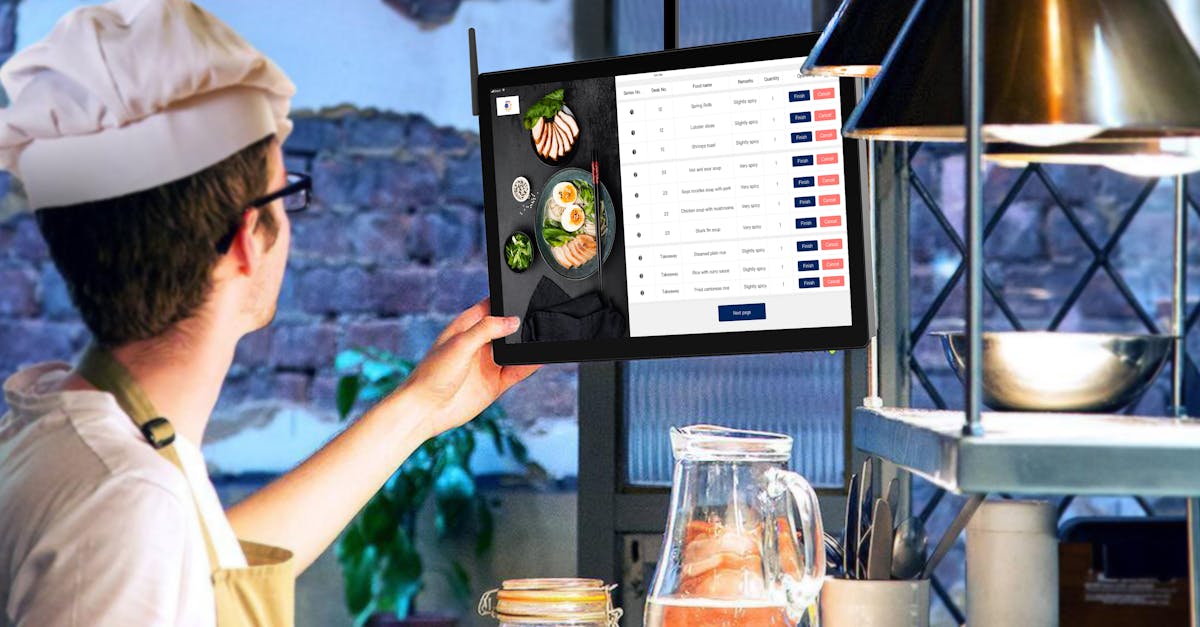
Toast has become the default POS system for restaurants across the country. The pitch is compelling: a restaurant-specific system that handles ordering, payments, kitchen display, online ordering, payroll, and more, all in one platform.
But that all-in-one convenience comes at a cost. And for many restaurant owners, that cost is much higher than they realize.
"I didn't understand what Toast was actually charging me until I had someone break down my statement. Between the processing fees, the SaaS fees, and the hardware payments, I was spending over $2,800/month for a two-terminal setup." - Anonymous user, r/restaurantowners
This guide breaks down Toast's real pricing, compares it to running your own POS with independent payment processing, and helps you figure out if you are overpaying.
How Toast's Pricing Actually Works
Toast's pricing is not as straightforward as their website makes it seem. There are multiple layers:
1. Software Subscription Tiers
| Plan | Monthly Cost | What You Get |
|---|---|---|
| Starter Kit | $0/month | 1 terminal, basic POS, limited features |
| Point of Sale | $69/month | Core POS features, reporting, menu management |
| Build Your Own | Custom pricing | Online ordering, loyalty, marketing, team management |
2. Payment Processing Fees
This is where it gets expensive. Toast bundles payment processing into their system, and you cannot use a third-party processor. Their standard rates:
- Card-present: 2.49% + $0.15 (Starter Kit) or 2.99% + $0.15
- Card-not-present (online orders): 3.50% + $0.15
The "free" Starter Kit plan charges higher processing rates to make up for the $0 software fee. You pay either way.
3. Hardware Costs
Toast requires proprietary hardware. You cannot bring your own terminals.
| Hardware | Cost |
|---|---|
| Toast Flex (countertop terminal) | $799+ or $0 upfront with payment plan |
| Toast Go 2 (handheld) | $609+ |
| Kitchen Display System | $499+ |
| Guest-Facing Display | $389+ |
The $0 upfront option typically means a 24 to 36 month payment plan with a higher monthly total, and a contract you cannot exit early without penalty.
4. Add-On Fees
- Online ordering commission: Up to 3% on third-party delivery orders
- Payroll: $40/month + $6/employee
- Marketing and loyalty: $50 to $150/month
- Additional terminals: $45 to $69/month each
The Real Monthly Cost of Toast
Let's build a realistic picture for a mid-volume restaurant:
Scenario: Full-service restaurant, $50,000/month in card sales, 2 terminals, online ordering enabled, average ticket $35.
| Cost Item | Monthly Cost |
|---|---|
| Software (Point of Sale plan) | $69 |
| Second terminal add-on | $45 |
| Payment processing (2.49% + $0.15 on $50k) | $1,460 |
| Online ordering processing (3.50% + $0.15 on $8k) | $292 |
| Hardware financing (2 terminals) | $75 |
| Total monthly cost | $1,941 |
That is $23,292 per year just for your POS and payment processing.
The Independent Alternative
Now let's price out the same restaurant using an independent POS system with a separate interchange-plus processor.
Independent POS Options for Restaurants
Several restaurant POS systems allow you to choose your own payment processor:
- SpotOn: Restaurant-focused, allows third-party processing
- Revel Systems: iPad-based, integrates with multiple processors
- Lightspeed Restaurant: Cloud-based, supports external processors
- TouchBistro: Restaurant-specific, can integrate with independent processors
Cost Breakdown: Independent Setup
Same scenario: $50,000/month card sales, 2 terminals, online ordering, average ticket $35.
| Cost Item | Monthly Cost |
|---|---|
| POS software (e.g., SpotOn or similar) | $65 |
| Second terminal | $40 |
| Payment processing (interchange + 0.20% + $0.10 on $50k) | $1,000 |
| Online ordering processing (interchange + 0.35% + $0.15 on $8k) | $210 |
| Hardware (amortized, bring-your-own terminals) | $30 |
| Total monthly cost | $1,345 |
Annual cost: $16,140
Side-by-Side Annual Comparison
| Category | Toast | Independent Setup | Difference |
|---|---|---|---|
| Software | $1,368 | $1,260 | $108 |
| Processing (in-person) | $17,520 | $12,000 | $5,520 |
| Processing (online) | $3,504 | $2,520 | $984 |
| Hardware | $900 | $360 | $540 |
| Annual total | $23,292 | $16,140 | $7,152 |
That is over $7,000 per year in savings. For a restaurant operating on 5 to 10% margins, this is the difference between a profitable year and a break-even one.
What Toast Does Well
Toast is popular for a reason. Here is what they genuinely do better than most alternatives:
1. Restaurant-Specific Design
Toast was built from the ground up for restaurants. The menu management, table layout, kitchen display integration, and modifier handling are excellent. Generic POS systems often feel clunky by comparison.
2. Hardware Durability
Toast's proprietary hardware is built for restaurant environments: grease, heat, spills, drops. Consumer tablets in cases do not hold up the same way.
3. All-in-One Simplicity
One vendor, one support number, one bill. For restaurant owners who do not want to manage multiple vendor relationships, this simplicity is valuable.
4. Toast TakeOut Marketplace
Toast's online ordering marketplace gives you access to customers without the 15 to 30% commission that DoorDash or Uber Eats charges. This is a genuine competitive advantage.
Related: For more on third-party delivery fees, read Are DoorDash and Uber Eats Fees Killing Your Restaurant?
5. Ecosystem Depth
Payroll, scheduling, marketing, gift cards, loyalty. Having everything under one roof reduces the number of integrations you need to manage.
Where Toast Falls Short
1. Processing Lock-In
The biggest issue. You must use Toast's payment processing. There is no way to shop around for better rates, no way to bring your own processor, and no leverage to negotiate.
"The thing that kills me about Toast is the processing lock-in. I love the POS but I know I'm overpaying on every swipe. It's like buying a car that only works with one gas station." - Anonymous user, r/restaurantowners
2. Contract Terms
Toast's hardware financing often comes with 24 to 36 month contracts. Early termination fees can be significant, sometimes thousands of dollars.
3. Rate Increases
Multiple restaurant owners have reported processing rate increases after their initial term:
"Started at 2.49% + $0.15. After my first year they bumped it to 2.99% + $0.15. When I asked about it, they said it was in the contract. Nobody told me during the sales process." - Anonymous user, r/restaurantowners
4. Hardware Costs
Proprietary hardware means you cannot shop around. If a terminal breaks after warranty, you are buying another Toast terminal at Toast's price.
5. Support Quality
This varies, but many owners report declining support quality as Toast has scaled rapidly:
Related: Read more owner experiences in Why Restaurants Are Leaving Toast POS and our honest review of the best Toast alternatives.
The Lock-In Problem in Detail
Toast's processing lock-in deserves deeper examination because it is the core financial issue.
When you can choose your own processor, you create competition for your business. You can:
- Get quotes from multiple processors
- Negotiate rates based on your volume
- Switch if your current processor raises rates
- Verify you are paying actual interchange with no padding
With Toast, none of this is possible. You accept their rates or you leave the platform entirely, which means new hardware, new software, staff retraining, and potential downtime.
This lock-in is by design. Toast's S-1 filing revealed that payment processing revenue is their largest revenue stream, not software subscriptions. Your processing fees are their primary business model.
💰 Want to see how much you're overpaying? Use our free savings calculator to find out in 30 seconds. Or get a free statement analysis from our team.
When Toast Makes Sense
Despite the higher cost, Toast is the right choice for some restaurants:
- Brand-new restaurants that need everything set up quickly with minimal vendor management
- Multi-location groups where Toast's enterprise features provide real operational value
- Restaurants heavily invested in Toast TakeOut marketplace for customer acquisition
- Owners who genuinely value simplicity over cost optimization and are willing to pay a premium for it
When to Consider the Independent Route
- You process over $30,000/month in card transactions
- Your Toast contract is ending or you are month-to-month
- You have experienced rate increases
- You want the ability to negotiate and shop for better processing rates
- You are comfortable managing two vendor relationships (POS + processor)
- You want to see actual interchange rates on your statement
How to Make the Switch
If you decide to move away from Toast, here is the process:
1. Check your contract. Know your termination terms and when your commitment ends
2. Get your processing data. Request your average ticket, transaction count, and card mix from Toast
3. Get interchange-plus quotes. Use your actual data to get accurate pricing from independent processors
4. Choose a restaurant POS. Test drive options that support third-party processing
5. Plan the transition. Most restaurants switch on a slow day (Monday/Tuesday) with both systems running in parallel
6. Train your staff. Budget 1 to 2 days for training on the new system
Related: Our complete guide on how to switch payment processors walks through this step by step.
💰 Want to see how much you're overpaying? Use our free savings calculator to find out in 30 seconds. Or get a free statement analysis from our team.
Ready to stop overpaying? Sleft Payments offers transparent pricing with no contracts and no hidden fees. Get a free quote or call us at (813) 534-0522.
Frequently Asked Questions
Can I use my own processor with Toast?
No. Toast requires you to use their integrated payment processing. This is non-negotiable.
Is Toast worth it for a small restaurant?
For a very small restaurant (under $20,000/month in card sales), the processing cost difference is smaller, and Toast's all-in-one convenience may justify the premium. Above that volume, the math increasingly favors independent processing.
What happens to my data if I leave Toast?
You can export most of your data (sales reports, customer info, menu items). However, some historical data may not transfer seamlessly to a new system. Export everything before canceling.
Are there any restaurant POS systems as good as Toast?
Toast's restaurant-specific features are genuinely strong. SpotOn and Revel come closest in terms of restaurant functionality while allowing processing flexibility. No system is a perfect 1:1 replacement, but the alternatives have improved significantly.
How much does it cost to break a Toast contract?
This varies based on your specific agreement, but hardware financing termination fees can range from $1,000 to $5,000+. Review your contract carefully or have someone review it for you.
Does Toast charge for online ordering?
Toast charges processing fees on online orders (typically 3.50% + $0.15). If you use Toast's marketplace for customer acquisition, there may be additional commission fees.
The Bottom Line
Toast built an impressive restaurant platform. The POS software is genuinely excellent, and the all-in-one approach solves real operational headaches for restaurant owners.
But that convenience comes at a significant cost, primarily through above-market processing rates and complete lock-in that removes your ability to negotiate or comparison shop.
For restaurants processing $30,000 or more per month, the savings from switching to an independent POS with interchange-plus processing can easily reach $5,000 to $10,000 per year. In an industry where margins are razor-thin, that is money that could go toward better ingredients, higher wages, or your bottom line.
Want to see what you are actually paying? Send us your Toast statement and we will break it down line by line, showing exactly where the money goes and what you could save on interchange-plus. Free analysis at sleftpayments.com/contact.
Did you know? Sleft Payments offers cash discount programs where your business pays zero processing fees. We also offer dual pricing, surcharging, interchange-plus, and flat-rate options with free terminal equipment and no long-term contracts. Learn more.
Related Articles
Want to know exactly how much you could save? Try the Sleft Payments Savings Calculator for a personalized estimate.