How to Safely Accept Credit Cards and Protect Your Business From Fraud

Credit Card Security For Business Owners, What to Know and How One West Philadelphia Merchant Got It Right
A lot of business owners worry about fees, but in some neighborhoods, the real fear isn't the cost. It's fraud.
Related: Beyond fraud, the right processor matters. Read about finding local merchant services that actually pick up the phone.
One of our merchants in West Philadelphia ran a successful seafood store for years. He sparingly took cards because he had seen too many horror stories: chargebacks, counterfeit cards, stolen numbers. He assumed accepting credit cards would open the door to risk he couldn't control.
When we first met him, he told us he'd only consider accepting cards if he could avoid exposing himself to fraudulent swipes. He even asked about "key-in only" setups because he thought manual entry might help him verify buyers.
(For the record: key-in transactions are less secure and carry higher risk and interchange.)
What he really needed was something every business needs:
1. Modern Hardware That Stops Fraud at the Door
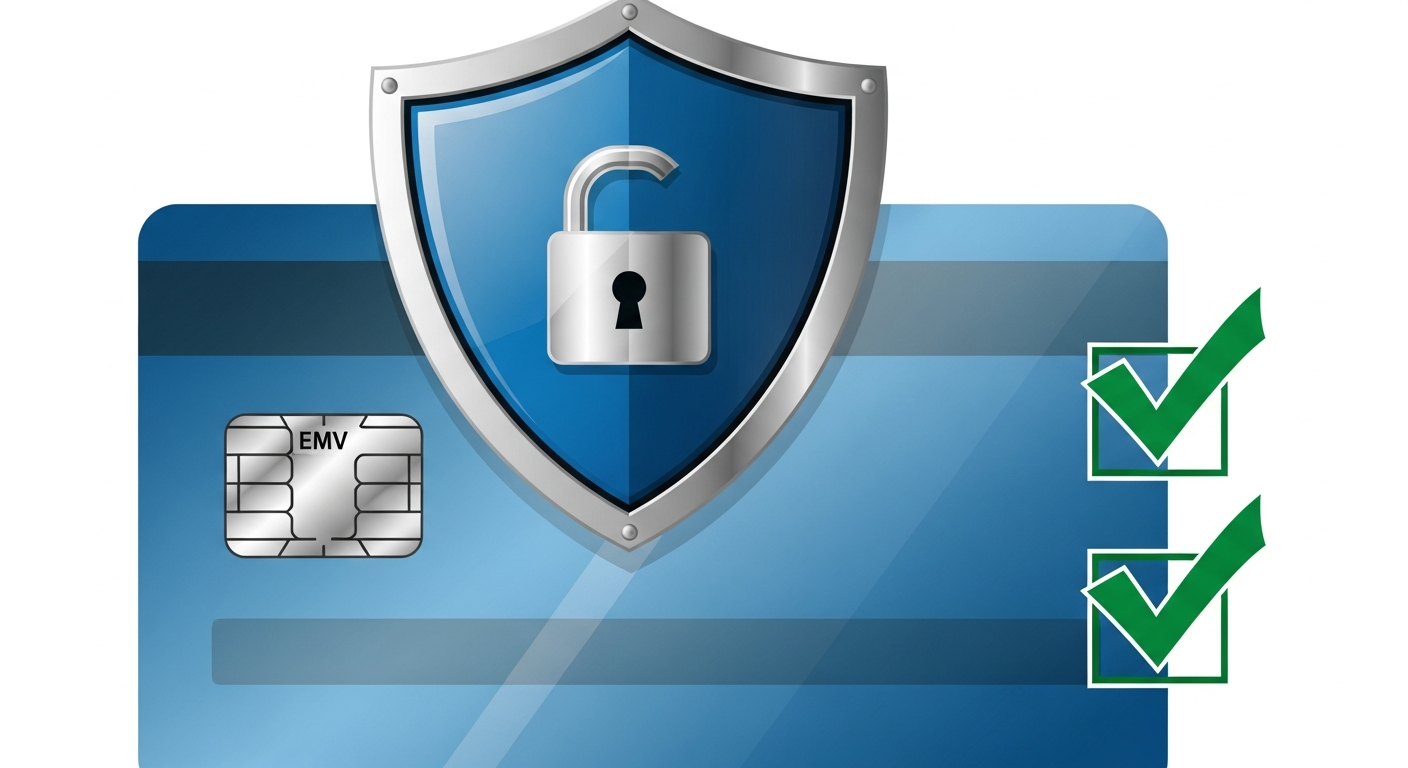
EMV chip technology reduces counterfeit card fraud by up to 76%. For those that don't know, that is the very little small chip located in the middle of the card on one end.
Chip cards generate a one-time cryptographic code that can't be reused or cloned. This makes it nearly impossible for counterfeiters to pull off a fraudulent swipe. So if someone has a chip, that's more secure than a swipe.
2. End-to-End Encryption (E2EE), Wifi and Mobile Hotpots
With E2EE, card data is encrypted the moment the customer inserts the card and stays encrypted until it reaches the processor.
Even if someone intercepted the transmission, the data would be unreadable. This is valuable if you are concerned that your wifi network might be compromised or you are using a hotspot.
3. PCI Compliance
For many small merchants, "PCI compliance" sounds like a massive technical burden. It's not.
In reality, using secure terminals, completing a short questionnaire, and following basic best practices is enough to prevent 99% of breaches. We handle annual PCI compliance for you at Sleft.
4. Real-Time Monitoring + Chargeback Protection
Today's processors (including what we set him up with) automatically flag suspicious patterns - mismatched addresses, unusual purchase sizes and abnormal card behavior.
Instead of reacting to fraud, merchants can actually prevent it.
Making our West Philadelphia's Merchant Secure
Our West Philly merchant now accepts cards confidently, sees higher average order values, and no longer turns customers away. His biggest takeaway?
"Security isn't about trusting customers - it's about trusting the system."
The Bottom Line
If you run a business, (especially in a high-risk area), upgrading your credit card security is non-negotiable. Fraud has evolved, but so has the technology built to stop it.
Whether you've never accepted cards or you're worried about doing it safely, the right setup can eliminate almost all of the risk. And once you're secure, consider a cash discount program to eliminate your processing fees too.
If you want help evaluating your current setup, or starting from scratch, reach out and we'll walk you through it just like we did for our West Philly merchant.
5. Tokenization: The Hidden Layer of Protection
Tokenization replaces sensitive card data with a unique, random string of characters called a "token." This token is useless to hackers because it can't be reverse-engineered back to the original card number.
For businesses that store customer cards for recurring payments, tokenization is essential. It means even if your system were breached, there's no usable card data to steal.
Most modern payment processors include tokenization by default, but it's worth confirming with your provider. If they don't offer it, that's a major red flag.
6. Address Verification Service (AVS) and CVV Checks
For any card-not-present transactions (phone orders, online sales, invoices), AVS and CVV verification add critical layers of protection:
- AVS matches the billing address provided by the customer against what the card issuer has on file
- CVV requires the 3- or 4-digit security code on the physical card
These checks dramatically reduce fraudulent transactions. If a transaction fails AVS or CVV, you should decline it - even if the customer complains. The chargeback cost is always worse.
💰 Want to see how much you're overpaying? Use our free savings calculator to find out in 30 seconds. Or get a free statement analysis from our team.
7. Train Your Staff to Spot Red Flags
Technology handles most fraud prevention, but your staff is the last line of defense. Train them to watch for:
- Multiple declined cards from the same customer
- Unusually large purchases from first-time buyers
- Customers who seem nervous or rush through transactions
- Cards where the name doesn't match the ID (when verification is appropriate)
- Buying patterns that don't match your typical customer
A quick "Can I see your ID?" on high-ticket items is a simple habit that prevents a lot of grief. Some states allow merchants to request ID for credit card purchases, so check your local laws.
8. Chargeback Management: Have a Plan
Chargebacks cost more than the original transaction amount. Between the refund, chargeback fees ($25-$100 per incident), and potential rate increases, a single chargeback can cost you $150+.
Here's how to minimize chargebacks:
1. Use clear business descriptors so customers recognize your business on their statement
2. Provide receipts (digital or printed) for every transaction
3. Have a visible refund policy posted at checkout
4. Respond to disputes immediately - you have a limited window
5. Keep transaction records including signatures, delivery confirmations, and communication
If chargebacks become a persistent issue, talk to your processor about chargeback prevention tools. Services like Verifi and Ethoca can resolve disputes before they become formal chargebacks.
The True Cost of Not Accepting Cards
Some business owners avoid cards entirely because of fraud fears. But consider what that costs you:
- The average card transaction is 2-3x higher than cash transactions
- 67% of consumers prefer paying with cards or digital wallets
- You lose walk-in customers who don't carry cash
- You can't sell online without card acceptance
The risk of fraud is real, but the risk of not accepting cards is bigger. The key is having the right safeguards in place - which is exactly what modern payment technology provides.
💰 Want to see how much you're overpaying? Use our free savings calculator to find out in 30 seconds. Or get a free statement analysis from our team.
Ready to stop overpaying? Sleft Payments offers transparent pricing with no contracts and no hidden fees. Get a free quote or call us at (813) 534-0522.
Frequently Asked Questions
How much does EMV chip technology cost to set up?
Most modern terminals with EMV capability cost between $200-$500. Many processors, including Sleft, provide terminals at no upfront cost as part of your merchant agreement. The investment pays for itself immediately through reduced fraud liability.
What happens if I don't have EMV and a fraudulent chip card is used?
Under the EMV liability shift (in effect since 2015), if a customer pays with a chip card and your terminal only supports swipe, you're liable for the fraudulent transaction. Upgrading to EMV isn't optional anymore - it's a financial necessity.
Is PCI compliance really necessary for small businesses?
Yes. PCI compliance is required for any business that accepts credit cards, regardless of size. Non-compliance can result in fines of $5,000-$100,000 per month from card brands. The good news: for small businesses, compliance is straightforward - mainly using secure equipment and completing an annual self-assessment questionnaire.
How do I handle a chargeback?
Respond immediately with documentation: transaction receipts, delivery confirmation, customer communication, and your refund policy. You typically have 7-10 days to respond. Having a processor with real support you can reach makes a massive difference when navigating disputes.
Can I require a minimum purchase for credit card transactions?
Yes. Under the Dodd-Frank Act, merchants can set a minimum purchase amount of up to $10 for credit card transactions. However, you cannot set minimums for debit card transactions. Post your minimum clearly at the register.
Ready to Secure Your Business?
Text "SECURE" to (813) 534-0522 for a free security assessment of your payment setup.
We'll review your terminals, encryption, PCI compliance, and chargeback exposure - then tell you exactly what needs fixing. No cost, no obligation.
If you're like our West Philly merchant, you'll wonder why you waited so long.
Related reading:
- Cash Discount Programs: Pay 0% in Processing Fees
- How to Switch Payment Processors Without Downtime
- Best Credit Card Processor in Florida 2026
- Payment Processing for Small Business: Complete Guide
About the Author
Grant Denmark
CEO & Founder of Sleft LLC
Grant helps small businesses across Florida and the East Coast accept credit cards safely and affordably. No hidden fees, no long-term contracts, just secure payment processing from people who answer the phone.
Don't get Sleft Behind
We help businesses keep more of every dollar.
Related Articles
- Chargeback Prevention Small Business
- Pci Compliance Guide Small Business
- How To Avoid Payment Processing Scams
Want to know exactly how much you could save? Try the Sleft Payments Savings Calculator for a personalized estimate.